






















































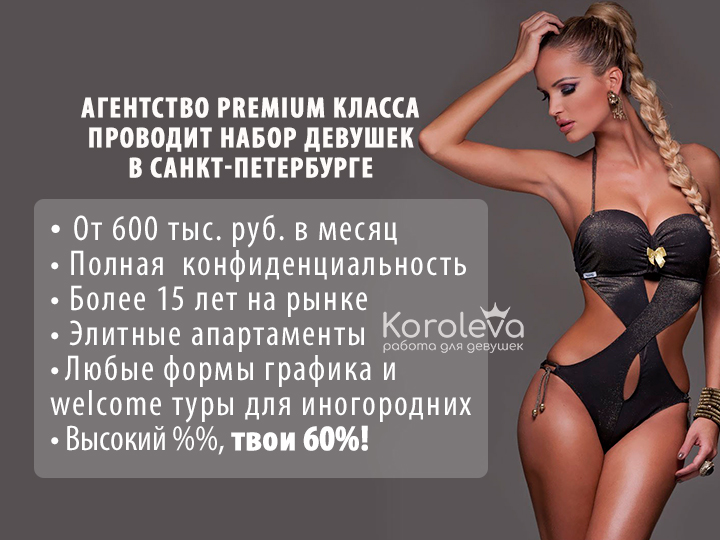





Главный принцип нашего агентства – красивая девушка должна реализовать свою мечту о сладкой жизни.
Теперь немного подробнее о других принципах:
Мы предлагаем работу моделью без опыта, сопровождение с выездом или без, трудоустройство в сфере досуга с проживанием и стабильной зарплатой.
Отдельные вакансии касаются работы вебкам-моделью. Если у вас есть жилье в Москве, можно подобрать вариант без проживания. Но на зарплату это никак не повлияет, поэтому не переживайте.
У нас есть принципы:
- Оплата напрямую зависит от занятости. Но при этом девушка сама выбирает, какой вариант зарплаты ее устраивает. Например, почасовая или в день.
- Барышня должна систематически следить за своим внешним видом. Не беспокойтесь, что будут затраты на походы в фитнес-клуб, к косметологу или к диетологу. Все расходы девушка, работающая в Москве, легко отбивает своей большой зарплатой.
- Проверка каждого клиента. В Москве действуют мошенники, и мы прекрасно это знаем. Поэтому защищаем девушек, работающих в агентстве. Все недобросовестные клиенты, занесенные в «черный список», никогда не появятся на пороге нашего ВИП-агентства.
- Обучение оплачивается. Девушки без опыта работы в Москве практически обречены, но только не у нас. Напротив, мы платим деньги на время обучения. Зарплата, возможно, не такая высокая, но это только начало. Хотя если сравнить с работой, например, официанткой или в офисе, зарплата девушке в Москве точно покажется большой.